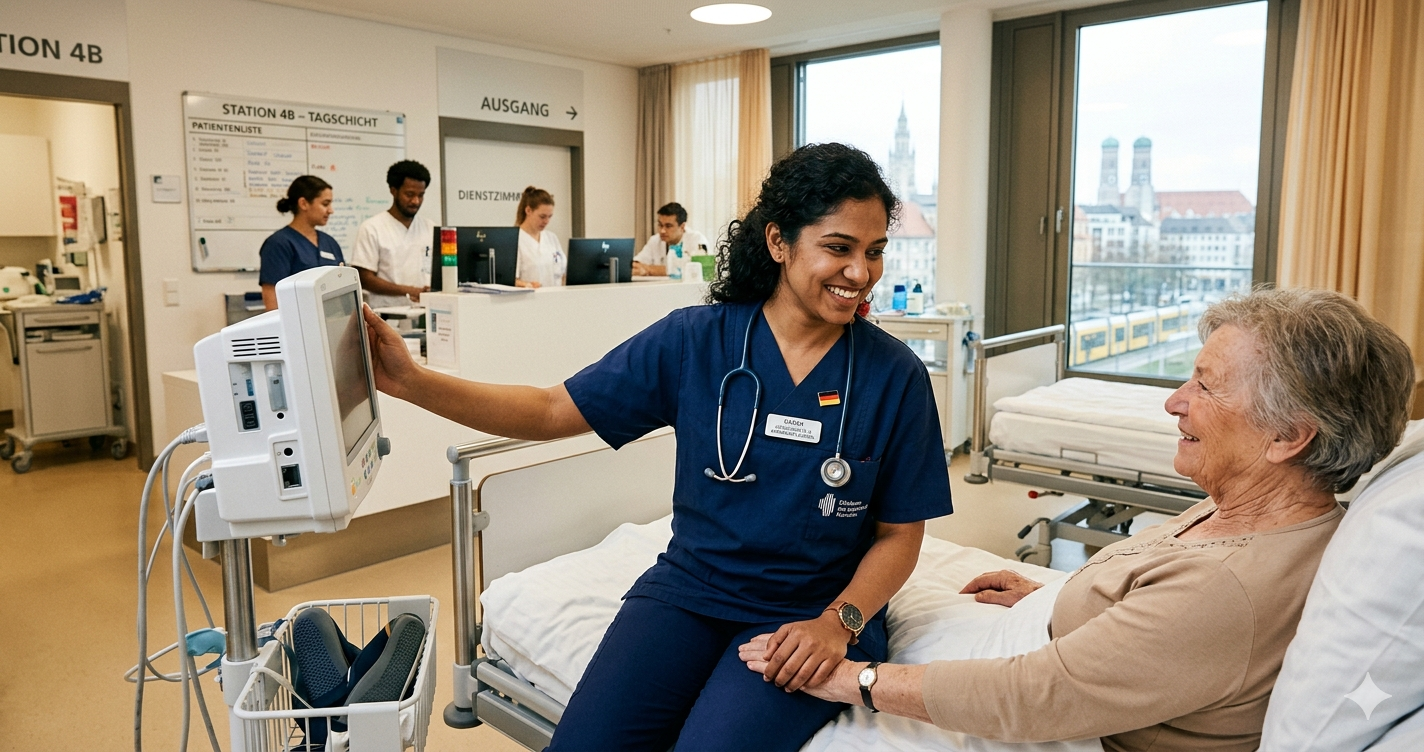
Are you a qualified Work as a Nurse in Germany dreaming of a stable career, high salary, and a high quality of life in Europe? Germany is currently facing a massive shortage of healthcare professionals and is actively looking for international nurses to fill the gap. However, the process can often feel overwhelming, with expensive agencies charging hidden fees and confusing bureaucratic hurdles. The good news is that you don’t need to pay a fortune to make this dream a reality.
This guide is designed to be your ultimate “No-Fee” roadmap. We will break down how you can navigate the language requirements, the recognition of your qualifications (Anerkennung), and the visa process entirely on your own—or through official government-funded programs that cost you zero upfront. By the end of this article, you’ll have a clear, actionable plan to transition from your current role to a registered nurse (Pflegefachkraft) in one of the world’s most advanced healthcare systems.
What is the German Nursing Roadmap and Why it Matters
The German Nursing Roadmap is a structured path that transitions a foreign-educated nurse into the German healthcare workforce. Germany operates under a strict “regulated profession” system. This means you cannot simply show up and start working; your degree must be evaluated to ensure it meets German standards.
Why This Matters Now
Germany’s “Nursing Care Strength Act” and the “Skilled Immigration Act” have made it easier than ever for non-EU citizens to enter the country. The demand is so high that many German hospitals now offer “Integration Packages.” These packages often include:
-
Paid German language courses.
-
Covered flight and visa costs.
-
Assistance with finding housing.
Understanding this roadmap is the difference between being exploited by “consultants” who take a cut of your salary and finding a direct contract with a reputable hospital that invests in your future. By following a “No-Fee” path, you retain full control over your career and your finances from day one.
Step-by-Step Guide: How to Move to Germany as a Nurse
Follow these steps to navigate the process without falling into the trap of expensive third-party agencies.
-
Step 1: Start Learning German (The A1 to B1/B2 Phase)
You cannot work in a German hospital without the language. Start at home using free resources like Deutsche Welle (DW) or YouTube. You will eventually need a B1 or B2 certificate from a recognized body like Goethe-Institut or Telc.
-
Step 2: Prepare Your Documents for Recognition (Anerkennung)
Gather your nursing degree, transcripts, and nursing council registration. These must be translated into German by a sworn translator.
-
Step 3: Apply for the Recognition Notice
Submit your documents to the relevant authority (Landesprüfungsamt) in the German state where you wish to work. They will issue a “Deficit Letter” (Defizitbescheid), explaining what you need to do to match German standards.
-
Step 4: Find a “No-Fee” Employer
Use official portals like Make it in Germany or Arbeitsagentur to find hospitals that offer “Recognition Projects.” These employers will sign a contract with you even before you leave your home country and will often pay for your further training.
-
Step 5: Apply for the 16d Visa (Recognition of Foreign Qualifications)
Once you have your contract and deficit letter, apply for the visa. This allows you to enter Germany to complete your “Knowledge Test” (Kenntnisprüfung) or an adaptation period while working as an assistant nurse.
-
Step 6: Pass the Knowledge Test & Get Licensed
Once you pass your final exam in Germany, you receive your Urkunde (license). You are now a fully recognized Registered Nurse with a significant salary increase.
The Math & Logic Behind the Move
Transitioning to Germany involves a simple “Value Exchange” formula. Germany provides the infrastructure and social safety net, while you provide the essential skill.
The Salary Formula
In Germany, nursing salaries are governed by collective bargaining agreements (TVöD). Your gross monthly salary ($S$) can be estimated as:
Where:
-
$B$ = Base Salary (typically starting around €2,900 – €3,400 for recognized nurses).
-
$H$ = Hours of overtime or specialized shifts.
-
$R$ = The rate for extra shifts.
-
$S_f$ = Supplements for night shifts, weekends, and public holidays (these are often tax-free).
Even as a “Nurse in Recognition” (before your full license), you will typically earn around €2,300 – €2,500 gross, which is more than enough to live comfortably while you finish your studies.
Real-Life Scenarios
Scenario A: The Direct Applicant
Maria is a nurse in the Philippines. She spends six months reaching B1 German using free online tools. She applies directly to a University Hospital in Munich. The hospital conducts a Zoom interview, offers her a contract, and pays for her B2 course and her flight. Maria arrives in Germany with €0 debt to agencies.
Scenario B: The “16d Visa” Route
Ahmed has a B1 certificate but his degree has “deficits” compared to the German curriculum. He enters Germany on a 16d visa. He works 30 hours a week as an Assistant Nurse (earning a decent wage) while attending a 6-month preparation course for the Knowledge Test. After passing, his salary jumps by €800 per month instantly.
Frequently Asked Questions (FAQs)
1. Do I really need to speak German to work as a nurse?
Yes. For patient safety and professional licensing, a minimum of B1 (for the visa) and B2 (for full licensure) is mandatory. There are no “English-only” nursing jobs in German clinical settings.
2. How long does the entire process take?
On average, it takes 12 to 18 months. The biggest variable is how fast you can learn the language. The document recognition process usually takes 3-4 months.
3. Can I bring my family with me?
Yes. Once you have a work contract and adequate housing, you can apply for “Family Reunification” (Ehegattennachzug). Your spouse will also be granted a permit to work in any field in Germany.
Conclusion & CTA
Moving to Germany as a nurse is a life-changing decision that offers career longevity, free healthcare, and a pathway to permanent residency. By following this “No-Fee” roadmap, you avoid the predatory fees of middlemen and step into a professional environment that truly values your expertise.
Ready to start your journey? Download the official “Checklist for Nursing Recognition” from the Make it in Germany portal today and book your first free German language lesson online!